Tuesday, January 1, 2013

A Summary

With this post, I complete a century on this blog, and it is an excellent co-incidence (as opposed to a devious plan) that this one also gives me an opportunity to summarise my engagement with cinema this year. I watched close to 160 titles this year, which is not much, but a relatively large percentage of those were remarkable or atleast, had permanent merit in them. Below, therefore, are the best films I watched this year (not the ones released this year, but the ones I happened to chance upon), a few images that stuck and a lengthy wishes I have for our national cinema as it were, in  the coming years.

---------------------------------------------------------------------------------------------------


Touki Bouki (1973) / Djibril-Diop Mambety

Best Titles.


  1. Le Trou / Jacques Becker
  2. The Lodger: A Story of the London Fog / Alfred Hitchcock
  3. Gate of Flesh / Seijun Suzuki
  4. Les Vampires / Louis Feuillade
  5. Marnie / Alfred Hitchcock
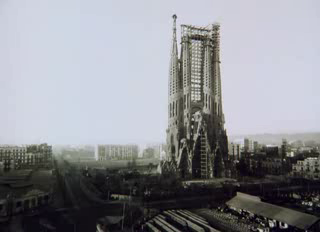
  6. Antonio Gaudi / Hiroshi Teshigahara
  7. Dr. Mabuse: The Gambler / Fritz Lang
  8. Statues Also Die / Chris Marker, Alain Resnais
  9. Zabriskie Point / Michelangelo Antonioni
  10. Cold Harvest / Isaac Florentine
  11. À Nous la Liberté / Rene Clair
  12. Goodbye, Dragon Inn / Tsai-Ming Liang
  13. Crazy Thunder Road / Sogo Ishii
  14. Monsieur Verdoux  / Charlie Chaplin
  15. Sunnyside / Charlie Chaplin
  16. Attack! / Robert Aldrich
  17. Muriel or The Time of Return / Alain Resnais
  18. Blast of Silence / Allen Barron
  19. The We and the I / Michel Gondry
  20. Touki Bouki / Djibril-Diop Mambety
  21. Eyes Without a Face / Georges Franju
  22. This is Not a Film / Jafar Panahi
  23. Hugo / Martin Scorsese
  24. Shock Corridor / Samuel Fuller
  25. Tinker Tailor Soldier Spy / Tomas Alfredson

Notable, Too.

  Pauvre Pierrot / Emile Reynaud
 The Beiderbecke Affair / David Reynolds, Frank W. Smith
 The Dreyfus Affair / Georges Melies 
 The Yakuza / Sydney Pollack

---------------------------------------------------------------------------------------------------

Wishlist 2013

This isn't meant to be a manifesto or a call-to-arms, merely the expression of a series of very personal wishes for Indian cinema as it only now begins to enter the 21st Century. While a few titles did gather international appreciation this year, I believe a more permanent change will happen only when we have a setup in place that:

a) facilitates independent film distribution/production/exhibition; this will include funding agencies dedicated exclusively to fund ideas of independent film producers - and they can be both offline and online. These may include funding websites such as Kickstarter or Indiegogo, but more essentially, agencies like the NFDC of yore, development labs and grants that are dedicated to the cause of alternative filmmaking. A serious movement has been made in this direction in recent times by the revived NFDC (which was under a serious threat of being closed in 2009) but much more needs to be done – funding agencies will have to cast their net wider, so that the representation at international festivals is multilingual as well as multi-ethnic, which really is one of the unique features of our cinema. In this regard, the support given to Haobam Paban Kumar, who made an important political film in AFSPA 1958 is an interesting case-study. To extend this, this will also entail a support-system, in terms of funding, exhibition and distribution of documentary filmmaking in the country, which is where some of the most interesting work is being conducted right now. Filmmakers such as Rajesh Jala, Amlan Dutta (and his brother), Faiza Ahmed Khan, Haobam Paban Kumar and of course, Anand Patwardhan can only gain from consistent support. In this case, an agency like PSBT or Doordarshan may also like to revise its methods of granting funds only to established filmmakers and not to younger, lesser known faces who may have important areas to direct their cameras at but not biological age to represent their prospective quality, and helps institute,

c) repertory theatres, independent art-house cinemas, revival houses that are dedicated to programming of contemporary/modern/classic world cinema retrospectives, screenings and rental stores (again, whether online or offline; and rental stores, not streaming sites) of obscure alternative titles that are made available in a legitimate and legal way - not a storehouse of piracy for even if I subscribe to it out of compulsion, their quality is always suspect and well, it is illegal so it is not a part of a regular framework. 

d) a set of societies for film critics such as the international FIPRESCI (t
he Indian chapter is represented currently by individuals who were excellent critics back in the day, but aren't active anymore) but the more local film society circles in cities such as Austin, Boston, New York, Los Angeles - thereby allowing criticism to exist as a fully-formed profession rather than a weekly response to the 'latest releases' - in that, specific grants/institutions should be allocated to aspiring film critics and the work of established serious writing on film should be routinely awarded. As such, there should also be a network of critics that organises frequent seminars, discussions, student exchange groups that these critics interact with, and a general filmmaker-critic interaction that is literally absent in the country (the new Baradwaj Rangan- Mani Ratnam interview book is an excellent starting point).

e) in the extension of above, print journals/magazines/platforms that are involved in the serious and sustained publication of serious writing on cinema. In this regard,  Cinemaya which was run for 21 years, Deep Focus which has recently been revived in Bangalore, or film journals such as Close-Up or Movement, which were active during the 1960s and the 70s could be important precedents.

f) an agency instituted and much more essentially, funded for the preservation of our cinematic legacy – in this regard, the work in the recent years of a government organ like NFAI has been commendable, but truth be told, I believe it was only under the able leadership of the late Mr. Vijay Jadhav, who died end 2010, that the NFAI could really fulfill the promise of its early days under Mr. P.K. Nair. As such, there is a need for more awareness, more involvement of the youth and needless to say, formal courses at film schools/institutes for people interested in film preservation (I know they have instituted a 6 weeks course but that is nothing, and means nothing). Currently, the NFAI has 11000 titles with it and Films Division (who still haven’t released a boxset of the films of S Sukhdev, SNS Sastry and Pramod Pati) have another 8000 films. 4000-5000 titles made in the country since the dawn of cinema are irreparably and permanently lost while around 17000 titles are in active circulation. But what’s more important is the urgent need to institute a culture of curiosity in regards to old titles – even if NFAI does have prints of silent films, it is not as if enough demand is being made to make them available to the viewing public. The screening of Throw of Dice (1928) at Trafalgar Square which was attended by 10000 individuals should be an important point of discussion – it means film-lovers in this country are curious about India’s silent film. In this regard, the work of historian B.D.Garga and critic Chidananda Dasgupta should be read and circulated widely. Important steps have been taken in the recent past with the issue of the DVD boxset of three of Phalke’s films (out of which, Krishnajanama (1919) is even available on Youtube) and also a number of screenings of Raja Harishchandra (1913) to mark the centenary of that film, but more needs to be done.  A government funded autonomous agency, perhaps NFAI itself, should now be funded to build its own underground vault of our cinema and should be given enough money to help us locate our films from world over and get those prints back home. 

g) which brings me to the point of the need of film education - film as a subject should be included in school curriculum, but even at the level of higher education, there should be an opportunity for the students to seriously consider cinema as a profession and not a passing hobby - this will happen only when there is a proper film school  that is cheap/affordable/government subsidised and creates professionals with individuals sensibilities and not individuals with professional sensibilities. In this case, looking at the Lodz Film School (which FTII was initially modelled on alongwith VGIK, Moscow), VGIK Moscow and of course, the best of 'em all, the Beijing Film Academy will help immensely. Also film schools and film education should be exempted from five-year plans - because these need a sustainable fifty-year plan to make any real change. 

h) they will need to reorganise and revitalise the FFSI (Federation of Film Societies in India) - nothing interesting is happening on the Film Society front in the country, except in the Western Region where individuals like Sudhir Nandgaonkar are instrumental in putting up interesting programmes in colleges/universities as well as organizing film appreciation workshops. The FFSI main headquarters in Delhi are housed in one room and the rules for registering a society are archaic. An impetus from the central government wherein a society is setup in every city (if not every school, ala FILMCLUB in UK) is much needed. The older film societies such as Chitralekha in Kerala, Suchitra in Bangalore, the now-defunct Katha Center for Film Studies in Mumbai and Cine-Central need to be given further impetus to refresh their objectives and spread out to other parts of the nation with their experience. In this regard, we also need more serious film festivals - the work of the Baburao Painter Society in the Kolhapur Intn't Film Festival (and on a side, the Pune Intn'l Film Festival), Jan Sanskriti Manch in Gorakhpur and Gurpal Singh/Swagata Sen in Puri is exemplary - more such festivals should be organised with a regular incentive of both income and social change. The International Film Festival of Goa should quickly be severed from the government and made autonomous with an ambitious film professional who should be selected after a series of selection rounds as the director of the festival. 

---------------------------------------------------------------------------------------------------

A Few Resonant Images


Monday, December 31, 2012

Notes on a Few Great Titles

The year’s drawing out to a close and it’s featured a number of revelatory moments in terms of my engagement with cinema. My viewing of films was abundant and fertile – if not in regards to the number of films I watched, then definitely for the variety I did. I will issue an year-end summary where I will list the best of the year, but till then, very brief notes on three great recent films (in this case, recent being post-1990):


Limits of Control (2009) / Jim Jarmusch
I did an essay a little-time ago about how most truly great contemporary films reflect on the uber-globalised world we inhabit right now as also on the anxieties, insecurities, modified forms of communication, political implications and benefits of this new arrangement. With his last film, however, Jarmusch extends that discussion even further logically – for him, a discussion of globalization must yield a discussion of cultural pluralism, destruction of conventional symbols (and subsequently, the prejudices they result in), understanding (which is always so much tougher than just acceptance) and only through all this, a truly globalised world, which exists not merely as a notion, but as a successful concept. Each character in the film battles/defies pre-determined conceptions about themselves; these are formed as a result of conditioning and awareness that result from the primary tools that humans use to recognise each other: languages and appearances (costume, colour of skin, hair colour, nakedness). Before each exchange, the first question the lead character is asked is: ‘Do you speak Spanish’? – he doesn’t, but that will not, must not hamper exchange. As he negotiates the Spanish-town geography, a few children approach him and ask him: ‘Are you an American gangster?’ Why do they ask him that? Why do we wonder the same? It is because we are conditioned to believe that a lone, serious, lanky shape that wanders the streets of a modern city must belong to a criminal – it is what cinema has taught us, it is what we believe. The man-with-no-name is an ancient creature, anachronistic in today’s world; a man devoid of an identity is an inconceivable creature in this newly porous world, for if he has no passport, no driving license, no social media existence, no political affiliation, how do we identify him? And if there is no identification, how can there be any categorization? The world arranges itself into a single, universal culture at a pace so swift that man, the eternally rationally creature, will look for ways in which to arrange and classify this increasingly torrential flow of information, people, ideologies, social structures and the like – for the greatest horror of mankind is to exist in a world that is mysterious to him, that he cannot understand, that he cannot master. But as Jarmusch posits, the more we attempt to control the world we live in, the more it will escape us: if there is anything that has limits, it is not how much of an enigma the world can be, but the control we have over its eternal malleability. An image we imagine to be a painting will convert into an actual scenery, a naked girl will turn into a movie-reference, a small, tiny bistro will suddenly turn into a giant interior location the moment the lead character will turn his head to look left (after all, in cinema, it is the direction of the human eyeline that illuminates dark corners and reveals new spaces; human vision is like torchlight in cinema, it is the ancient discoverer) and the ‘American gangster’ lead, in the ultimate scene of the film, will recede into a toilet, discard his flashy suit, wear a jumper with the Senegalese flag on it and walk out of the building (thereby breaking our movie-audience perception of him). In the final seconds, the film, hitherto shot with the camera firmly and professionally set on the tripod, will suddenly attain a vitality when someone will remove it from the clamp and swerve it a little to allow it to register a soft-focus, badly lit blurry image of the exterior – right in front of our eyes, the entire universe of the film will self-destruct. Nothing, in a world that changes so quickly, will exist as we know it.


Cold Harvest(1999) / Isaac Florentine
This is the sort of cinema-folding-back-onto-itself masterpiece that is rare to see in the 21st century, where everyone seems desperate to move forward and break away (some aesthetically, some through the use of technology and finally, some by bullshitting their way through). This Florentine masterpiece treads genre-based iconographies and movie-universes the way most films can only tread, say, a scene or a narrative. 

In a post-apocalyptic world, people wear dusters, enter salons, talk tough, sweat profusely, sling guns, duel like cowboys (there is a final showdown rapidly cut to a swelling-up music score as well) and bathe like actresses from a French period-drama. The lead, played by Gary Daniels, is introduced in a scene borrowed verbatim from The Good, the Bad and the Ugly. Apart from iconography-loans from Spaghetti Westerns, the film is also, in parts,  a chase-drama, a mutant film, a sci-fi film (the production design includes a lot of things with buttons on them, a control room setup, tracking-and-homing devices), a good ol’ action film, a strange childhood grudge-revenge film (the villain and the hero share a childhood rivalry) and there is also an a sentient benevolent race of gypsies who speak English like they are in Star Wars. There are injections also of post-punk, lots of leather and chain gangs like Sogo Ishii’s early 80s films. It is as if Florentine believes that if the world were to enter an apocalypse, it will collapse inevitably into a series of endless movie-homages.

Still, one of the great achievements of this film is the very complex psycho-sexual relationship between the female lead and her brother-in-law, the hero. It is rendered sexless by the virtue of her being pregnant (and of course, since it is all just like Civil War, preggers equals pure) but it is also simultaneously strange because the hero and his brother were twins, so that her brother-in-law looks just like her dead husband. Also, the villain Bryan Genesse inhabits this kaleidoscopic, multi-dimensional world perfectly, adding a baritone to his voice and squinting whenever he can, it is a tremendous performance in a tremendous film.